 By
By 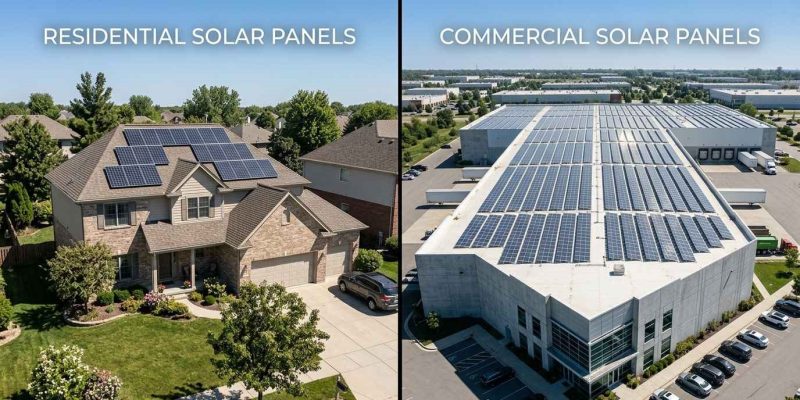
Introduction
Solar energy is becoming one of the most popular solutions for reducing electricity costs and supporting a cleaner environment. As more property owners explore renewable energy options, solar panel systems are being installed in homes, offices, warehouses, and industrial facilities around the world.While both residential and commercial solar panels convert sunlight into electricity, they are designed to meet different energy requirements.
The size, installation process, cost, and overall purpose of these systems can vary significantly depending on the property type.
If you are considering a solar panel system, understanding the differences between residential and commercial solar panels can help you make the right decision. This guide explains how these systems compare and what factors to consider before investing in solar energy.
What Are Residential Solar Panels?
Residential solar panels are designed specifically for homes and residential properties. These systems are usually installed on rooftops and generate electricity for everyday household activities such as lighting, appliances, air conditioning, and electronic devices.
The size of a residential solar panel system depends on the home’s energy consumption and available roof space. Most homeowners choose solar energy to lower monthly utility bills, reduce dependence on traditional power sources, and increase long-term energy savings.
Modern residential systems are designed to provide reliable performance while complementing the appearance of a home. Many homeowners also choose battery storage solutions to store excess electricity for use during nighttime or power outages.
What Are Commercial Solar Panels?
Commercial solar panels are built for businesses, office buildings, retail stores, manufacturing facilities, warehouses, educational institutions, and other commercial properties.
Because businesses generally consume more electricity than households, commercial solar panel systems are much larger and capable of generating higher amounts of power. These systems can be installed on large rooftops, parking canopies, or open land areas to maximize energy production.
Commercial solar installations help businesses reduce operating expenses, improve energy efficiency, and support sustainability initiatives. For many organizations, solar energy is a long-term investment that delivers both financial and environmental benefits.
Key Differences Between Residential and Commercial Solar Panels
The table below highlights the main differences between residential and commercial solar panels.
| Feature | Residential Solar Panels | Commercial Solar Panels |
| Primary Use | Homes and residential properties | Businesses, offices, warehouses, and industrial facilities |
| System Size | Smaller systems | Larger systems |
| Energy Production | Designed for household electricity needs | Designed for high energy consumption |
| Installation Location | Primarily rooftops | Rooftops, parking structures, and open land |
| Energy Demand | Moderate and predictable | High and continuous |
| Number of Panels | Fewer panels required | Often includes dozens or hundreds of panels |
| Installation Complexity | Relatively simple | More complex and technical |
| Initial Cost | Lower upfront investment | Higher upfront investment |
| Maintenance Requirements | Basic maintenance and inspections | More comprehensive maintenance programs |
| Scalability | Limited by roof space | Easier to expand when needed |
| Return on Investment | Long-term household savings | Significant business energy savings |
| Best Suited For | Homeowners | Businesses and commercial property owners |
Benefits of Residential Solar Panels
Residential solar panels offer several advantages for homeowners:
- Lower monthly electricity bills
- Reduced reliance on traditional energy sources
- Increased property value
- Long-term energy savings
- Environmentally responsible energy generation
- Potential access to government incentives and rebates
- Greater energy independence
These benefits make solar energy a practical investment for many households.
Benefits of Commercial Solar Panels
Commercial solar systems provide unique advantages for businesses:
- Reduced operating expenses
- Improved energy efficiency
- Lower long-term electricity costs
- Enhanced sustainability efforts
- Positive brand image and environmental responsibility
- Better control over energy expenses
- Potential financial incentives and tax benefits
For many businesses, solar energy supports both cost savings and corporate sustainability goals.
How to Choose the Right Solar Panel System
Selecting between residential and commercial solar panels depends on several factors:
Evaluate Your Energy Usage
Understanding your current electricity consumption is the first step. Energy bills can provide valuable insights into how much power your property uses.
Consider Available Space
Assess the available roof space or land area for installation. The amount of usable space directly impacts system size and energy production potential.
Define Your Budget
Determine your available budget and long-term financial goals. While solar energy requires an upfront investment, the long-term savings can be substantial.
Think About Future Needs
Consider whether your energy requirements may increase in the future. Choosing a system with expansion potential can provide additional flexibility.
Work With Experienced Professionals
A qualified solar installer can assess your property, recommend the appropriate system size, and ensure the installation meets all relevant requirements.
Which Solar Solution Is Right for You?
Choosing between residential and commercial solar panels depends on your property’s energy requirements and long-term goals. Residential solar panels are ideal for homeowners who want to reduce electricity bills, increase energy independence, and make use of available roof space. Commercial solar panels, on the other hand, are better suited for businesses that consume larger amounts of electricity and want to lower operating costs over time.
The right solar panel system should align with your energy usage, budget, available installation space, and future expansion plans. Consulting an experienced solar provider can help you determine the most efficient solution for your specific needs.
Conclusion
Residential and commercial solar panels both turn sunlight into electricity, but they are made for different purposes. Residential solar panel systems are designed to meet the energy needs of homes, while commercial solar systems are built to handle the higher energy demands of businesses and larger buildings.
By understanding the differences in system size, installation, energy production, maintenance, and cost, property owners can choose the solar solution that best fits their needs. Whether you want to lower electricity bills at home or reduce energy costs for your business, a solar panel system can be a valuable long-term investment.
As solar technology continues to improve, more homes and businesses can benefit from clean energy, lower power costs, and a more sustainable future.






Comments